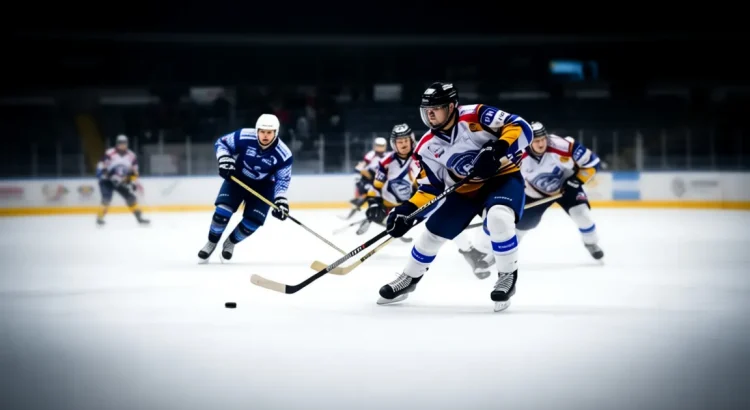
Key Differences Between Bandy and Ice Hockey
If you already play ice hockey and step onto a bandy field, the first thing that hits you is the space. The surface feels huge, the ball rolls instead of slides, and you carry eleven players instead of six.
Rink and Roster Basics
Bandy uses a field close to soccer size, roughly 100 by 60 meters with rounded corners. Ice hockey rinks stay much smaller, usually 61 by 26 meters.
- Bandy teams field eleven players, including a goalkeeper.
- Ice hockey teams use six players total.
- Substitutions in bandy happen less often because the larger area tires players faster.
Ball, Puck, and Sticks
Bandy players hit a small orange ball. Ice hockey uses a black puck. The ball bounces and rolls more, so you learn to keep it on the ice with quick taps rather than long slap shots.
| Item | Bandy | Ice Hockey |
|---|---|---|
| Object | Ball | Puck |
| Stick curve | Shallower, longer blade | Deeper curve |
| Shots | Lower trajectory, more passing | Higher slap shots common |
How the Game Flows
Offside rules in bandy mirror soccer: you cannot cross the blue line ahead of the ball. Hockey allows more freedom behind the blue line. Body checking stays rare in bandy, so you focus on positioning and stick battles instead of hits.
Games run two 45-minute halves in bandy. Hockey uses three 20-minute periods. Expect fewer whistles but more continuous movement on the bigger surface.
Situations You Meet on the Ice
Power plays look different. In bandy you often defend with ten players spread across a wide area, so gaps open fast if you lose shape. In hockey the tighter rink lets you pack the slot and block shots more easily.
Corner play in bandy rewards quick give-and-go passes along the boards because the ball travels farther. In hockey you battle for loose pucks in tight spaces with more physical contact.