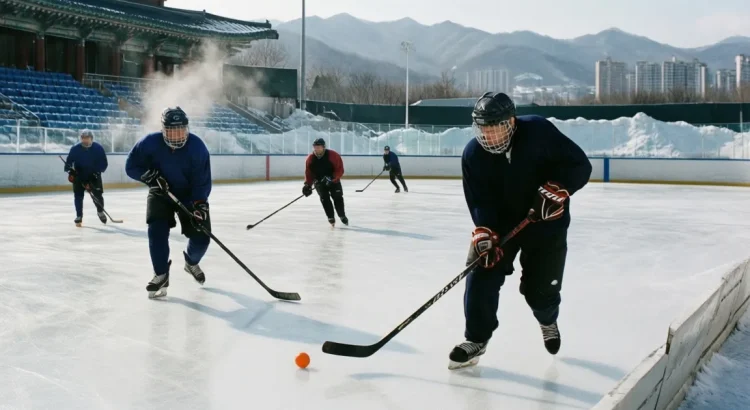
The Role of Bandy in Asian Winter Games History
Bandy entered the Asian Winter Games as a team sport that uses a ball and sticks on large ice surfaces. It gives countries with strong hockey traditions another way to compete. You see it most often when the host nation already has rinks and clubs in place.
When Bandy First Appeared
The sport joined the program in 2011 at the Astana-Almaty Games in Kazakhstan. Organizers added it to fill out the schedule with an outdoor team event that fits cold climates. Since then it has returned only when the host can supply proper bandy fields.
Earlier editions focused on skiing and skating. Adding bandy shifted the mix toward games that need bigger team rosters and longer matches.
Countries That Have Taken Part
Kazakhstan fields the strongest side most years because many players come from established clubs in Almaty and Astana. Mongolia and Kyrgyzstan send smaller squads that rely on speed and quick passes rather than set plays.
- 2011: Kazakhstan won gold after beating Mongolia in the final.
- 2017: Kazakhstan defended the title on home ice again.
- Other nations such as China and Japan have sent observers but have not yet entered full teams.
How Matches Are Run
Games last two 45-minute halves on a field close to soccer size. Eleven players per side move a small ball with curved sticks. Referees stop play only for fouls or when the ball leaves the ice.
Teams warm up on the same surface they use for the match, so conditions stay consistent. You notice fewer substitutions than in ice hockey because the larger rink lets players spread out and recover while still moving.
| Year | Gold | Silver |
|---|---|---|
| 2011 | Kazakhstan | Mongolia |
| 2017 | Kazakhstan | Kyrgyzstan |
Keeping Track of Future Events
Check the official Asian Winter Games site two months before opening ceremonies for the exact bandy schedule. Local federations in Kazakhstan often post live streams on their own channels.
- Look for the bandy section under team sports.
- Note which days include the group stage and knockout rounds.
- Follow the national bandy federation accounts for score updates during matches.